Signals訊號
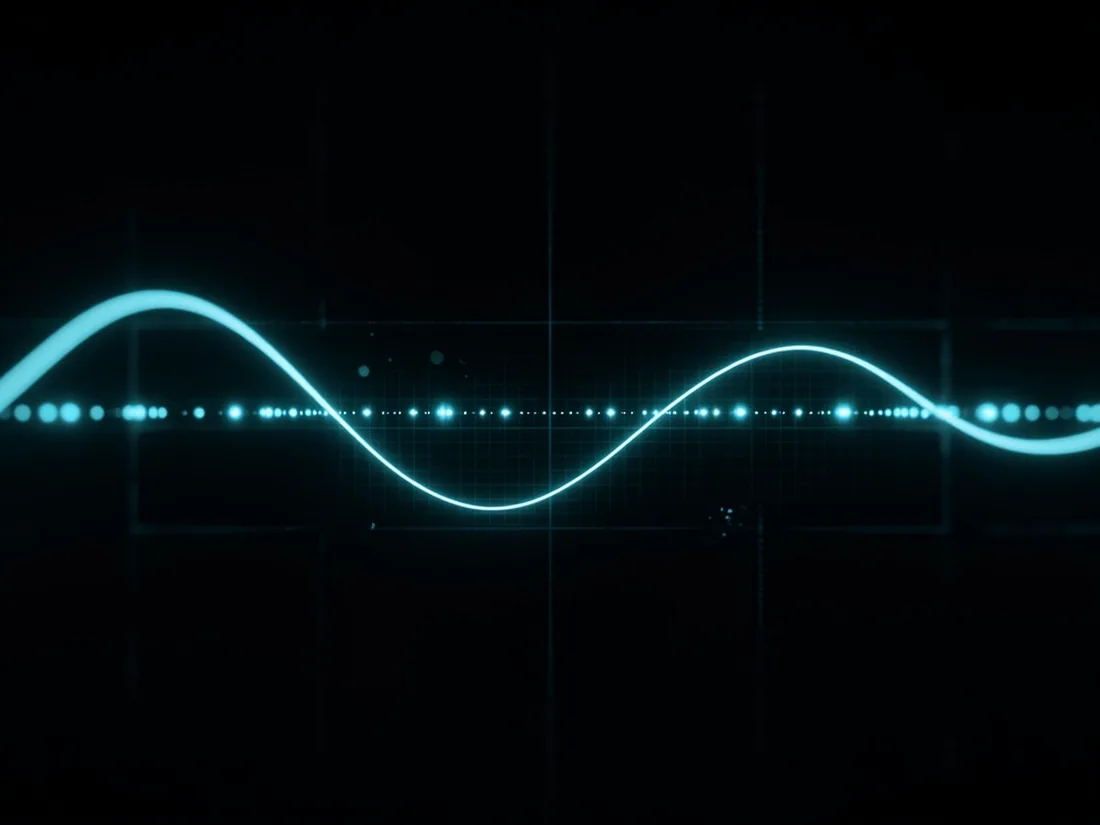
Every digital recording is a rumour about an analogue wave. Set the signal above half the sample rate and watch what replaces it: not noise, not blur, but a second sine — lower, smoother, and absolutely convincing. Aliasing does not degrade the truth. It substitutes one.
Sampling controls
Nyquist–Shannon, in one sentence: a signal sampled at a rate higher than twice its highest frequency can be reconstructed exactly, and at any lower rate it cannot — the theorem gives both the guarantee and the penalty, and it is not a matter of effort or bit depth. The boundary fs / 2 is called the Nyquist frequency, and it is a wall, not a gentle slope. Above the wall, recovery is perfect; below it, recovery is a fiction.
Take the arithmetic example this page is built around: a 5 Hz sine sampled at 6 samples per second. The samples land at exactly the same places as they would for a 1 Hz sine — the difference, |5 − 6|, is the alias — so any reconstruction from those samples alone must return the slower wave. The general rule is alias = |f − k·fs| for the nearest multiple k·fs. Note what happened: the error is not fuzz. It is a clean, low, entirely wrong tone that no listening test can distinguish from the original.
That is why every analogue-to-digital converter has a low-pass filter in front of it. The anti-alias filter removes everything above the Nyquist frequency before sampling, because content that would fold down cannot be untangled afterwards — folding is not a smear that can be reversed, it is an identity between two different signals. Audio converters filter hard for exactly this reason; the compromise lives in the filter’s steepness, never in skipping it.